




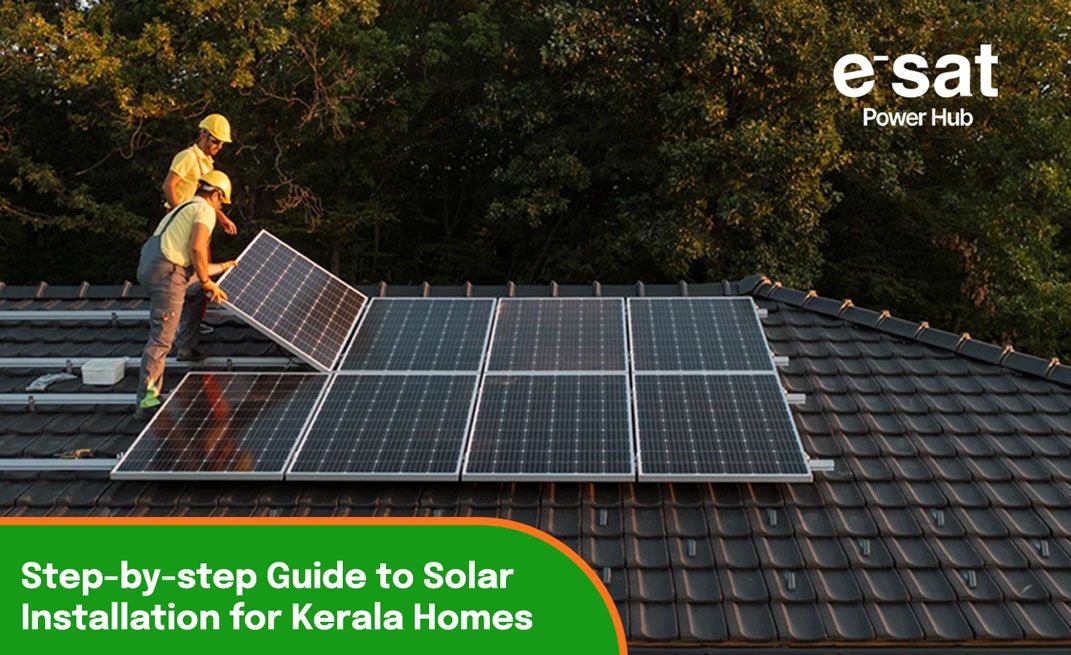
Planning a solar installation in Kerala is one of the best ways to cut power bills and protect yourself from rising electricity tariffs. Kerala’s strong sunlight and supportive policies make it ideal for modern solar energy systems for homes.
1. Understand your home’s energy needs
Before thinking about panels or prices, check how much power your home actually uses.
- Collect the last 6–12 months of electricity bills and note the average monthly units.
- Identify heavy‑load appliances like ACs, pumps, geysers and ovens.
- Decide whether you want to offset 50%, 75% or close to 100% of your current usage.
This helps your installer size the right solar energy system for your home instead of overselling or undersizing the plant.
2. Evaluate your roof for solar panels
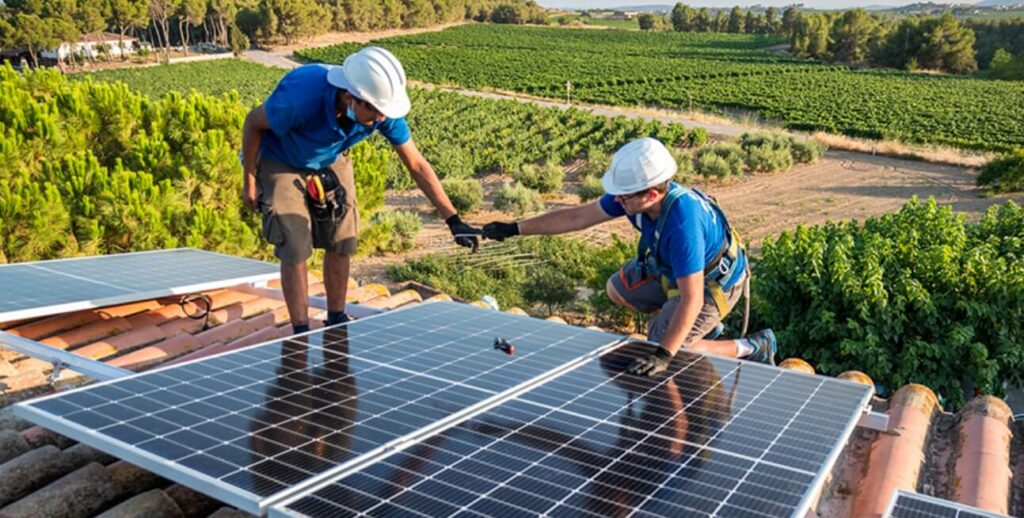
The roof is the foundation of a successful solar panel installation in Kochi or anywhere in Kerala.
- Check roof type: RCC, tiled or metal sheet – all can work with the right mounting structure.
- Ensure at least 3–4 hours of shadow‑free sunlight between 9 AM and 3 PM.
- Confirm structural strength for the weight of solar panels for home plus mounting structures and wind loads.
A quick site visit by E‑Sat Power Hub or any professional EPC company will confirm feasibility and the best orientation.
3. Choose the right solar energy system type
For Kerala homes, you generally choose one of three options:
- On‑grid solar installation – Connected to KSEB grid with net‑metering; best for reducing bills and using subsidies.
- Hybrid system – On‑grid plus battery backup; ideal if you face frequent power cuts but still want net‑metering benefits.
- Off‑grid system – Runs completely on batteries and solar, usually for remote homes or locations without reliable grid.
Most city homes go with on‑grid or hybrid systems because they combine savings with reliability.
4. Finalise capacity and components
Once the system type is clear, the installer designs the plant.
Key decisions:
- System size (kW) – Based on roof space, load and budget (for many Kerala homes, 3–5 kW is common).
- Solar panels for home – Mono PERC or similar high‑efficiency modules, ideally with 20–25 year performance warranty.
- Inverter – On‑grid or hybrid inverter sized to match system capacity and future expansion plans.
- Mounting structure and wiring – Galvanised structures, DC/AC cables, protection devices and earthing for safety.
Asking for a clear BOQ (Bill of Quantities) and data sheets ensures you know exactly what is being installed.
5. Site visit, proposal and approvals
A professional solar panel installation in Kochi will always include:
- Detailed site survey (roof measurements, shading analysis, electrical panel check).
- System design drawing with panel layout and inverter placement.
- Transparent proposal showing cost, expected monthly generation and payback period.
For on‑grid systems, your installer also guides you through KSEB / national portal applications for net‑metering and any available subsidies.
6. Solar roof installation and wiring
After approvals and material delivery, the physical solar installation begins.
Typical steps:
- Fix mounting structures on the roof with proper waterproofing.
- Install solar panels for home on the structures at the right tilt and orientation.
- Complete DC wiring from panels to inverter, then AC wiring from inverter to distribution board.
- Add protections: DC/AC MCBs, surge protection devices, earthing and lightning protection where needed.
The work should follow MNRE and KSEB standards for safety and performance.
7. Testing, net‑metering and handover
Once the installation is complete:
- The engineer tests open‑circuit voltage, current, inverter parameters and overall system performance.
- Net‑meter is installed and synchronised with the grid (for on‑grid and hybrid plants).
- You receive a handover kit with drawings, warranties, inverter app login and basic operating instructions.
From this point, your solar energy system for home starts offsetting your power bills every sunny day.
8. Basic maintenance for long‑term output
Solar plants need very little maintenance in Kerala’s climate, but a few habits keep efficiency high:
- Clean panels gently with water and a soft brush every few weeks or when visibly dusty.
- Check generation in the monitoring app monthly to spot sudden drops.
With proper care, a good quality solar installation can deliver reliable savings for 20–25 years. To learn more about solar installation or to request a detailed estimate, please contact E‑Sat Power Hub today.